
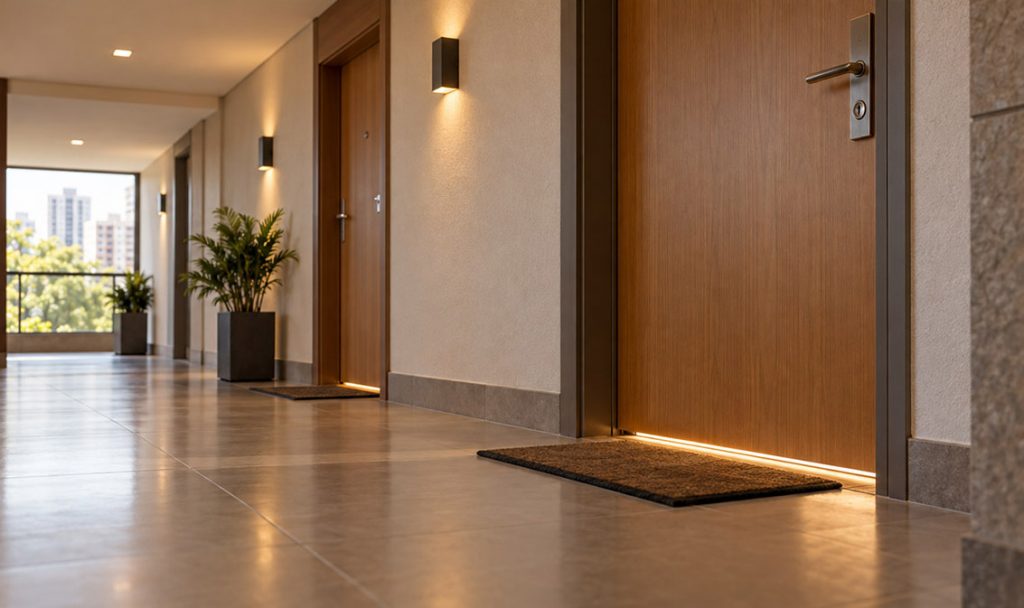
This study investigated the influence of gaps under doors on the acoustic performance of wall and door assemblies separated by entrance halls. A case study was conducted, involving 32 in situ acoustic tests, following ISO 16283-1 and ISO 717-1 standards to evaluate the Weighted Standardized Level Difference (DnTw) in relation to the average gap size (Mf). The hypothesis, which predicted a lower DnTw with the presence of gaps, was confirmed. Results indicated that the presence of gaps significantly degraded acoustic performance, while the use of gap fillers effectively restored performance to the superior level required by NBR 15575, the Brazilian building performance standard. Notably, misaligned doors consistently showed higher DnTw values than aligned doors, even with gaps, highlighting the combined importance of gap treatment and door positioning. These findings offer crucial evidence-based subsidies for architectural design and acoustic engineering, enabling professionals to prioritize interventions that improve acoustic comfort and user’s quality of life in residential buildings.